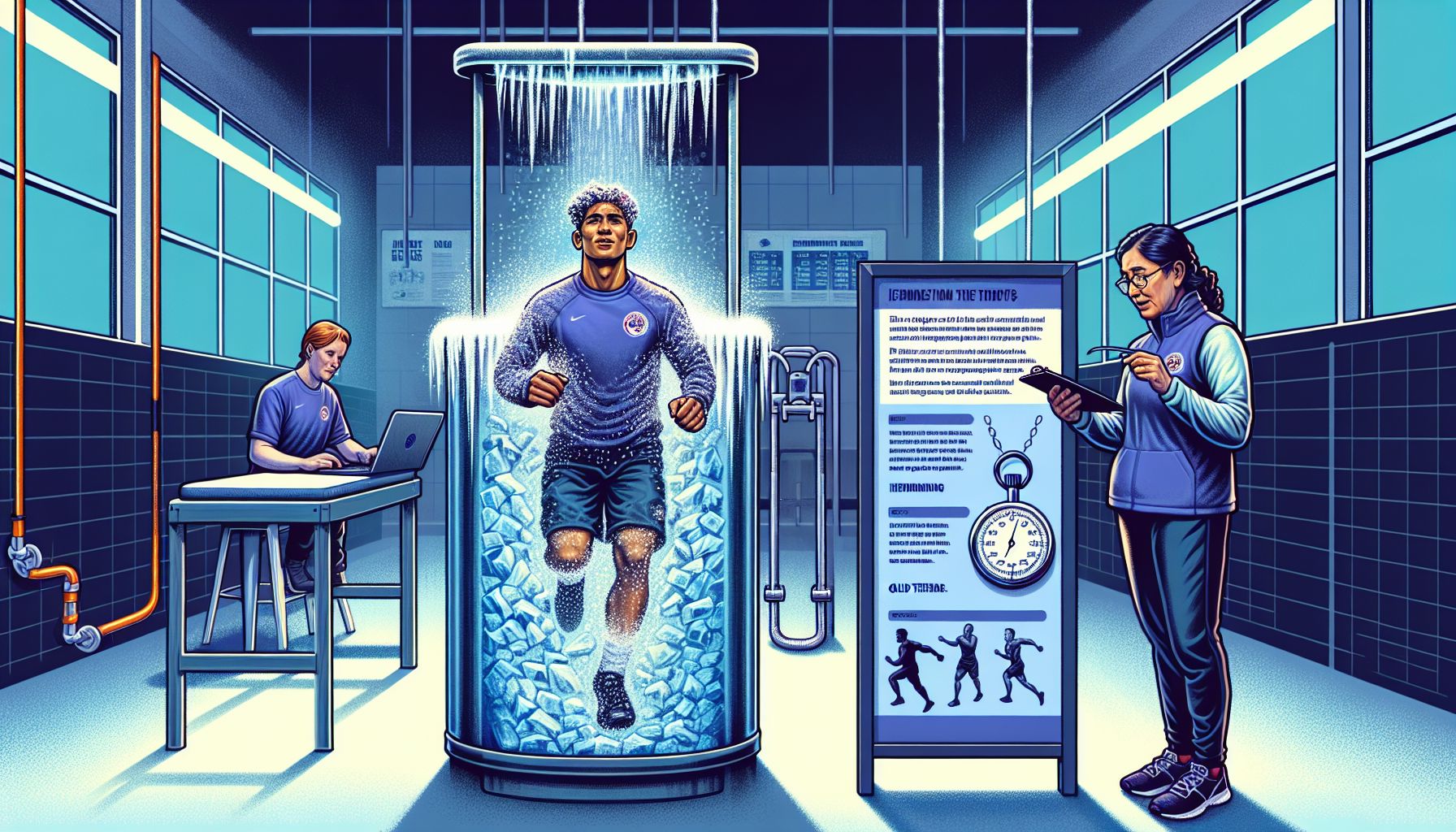
Branding themselves as the gateway to accelerated recovery and enhanced performance, ice baths have become a favored tool among athletes and fitness professionals. From elites to amateurs, you’ll spot a common trend of athletes immersing themselves into tubs filled with ice-cold water post-exercise. This is no trial to prove physical resilience but a scientifically-backed method to ease aches, minimize fatigue, and strengthen one’s capability—an essential part of what we call ‘Cold Plunge.’
The Theory Behind Ice Baths: Cryotherapy
Essentially, ice baths fall within the branch of cryotherapy. As the term specifies, ‘cryo’ refers to intense cold, and ‘therapy’ indicates a process of healing. A regular part of various physical therapy programs, cryotherapy aims at exploiting the psychophysiological responses of the human body to extreme cold.
When one enters an ice bath, the sudden cold, becoming even piercing at times, constricts blood vessels and reduces blood flow, taking down tissue inflammation and breakdown. More interestingly, once you step out of the chilly soak, the recovery of normal body temperature promotes an increase in blood flow to the affected areas. This shift instigates an effective cleaning process that discards damaged cells and toxicity.
Discovering the Perks: Multiple Benefits of the Cold Plunge
Let’s dive a bit deeper into how this cold baptism releases an array of benefits:
Promotes Recovery
Arguably the most widely-recognized advantage of ice baths is their potential for post-workout recovery. Ice baths are known to steel your body against lactic acid build-up—a major cause of muscle soreness.
Minimizes Inflammation
Sub-acute inflammation is the body’s defense mechanism following intense physical exertion but can lead to swollen muscles and marked discomfort. The annotated decrease in blood flow during cold plunge minimizes inflammation, hence fostering overall wellness.
Reduces Excitation of Nerves Encoding Pain
The immersion in cold water creates a peripheral nervous shock that reduces nerve activity and pain perception, potentially helping in short-term pain relief.
May Enhance Mood and Mental Health
Emerging research demonstrates that cold exposure therapy, similar to physical activity, may stimulate the production of ‘feel-good’ chemicals such as endorphins, helping to subside anxiety and enhance mood.
Provides Heat Acclimation
Lastly, exposure to cold contrast being the underlying principle of ice-baths, allows athletes in certain sports to acclimate themselves to unusual extremes of season or environment comfortably.
Guiding to Right Practise: How to Safely Do an Ice Bath
If done correctly, ice baths can offer splendiferous benefits. Here’s a smoothly descending pathway for your very first Cold Plunge:
- Fill the tub with cool water first, then add lots of ice. Aim for a water temperature between 50 to 59°F (10 to 15°C).
- Immerse leg muscles up for 15 to 20 minutes. Remember, dipping the whole body must be strictly avoided.
- Do this once or twice in a week deceased sufficient to reap the benefits.
Splitting ice baths and strength training sessions by 24 hours is a decent approach to foster muscle adaptation.
Conclusion: Ice Bath- A Training Catalyst or just a Low-Temperature Fiction?
However myriad of benefits ice baths profess, there remains skepticism around their practice along scientific circles. Athlete reactions to ice baths can present an extreme variance, thus undermining how viable the evidence backing ice baths remains.
To wrap things up, we’ll veer towards acknowledgement. Like any advantageous process—diet choice, ergonomic practices, even work-leisure balance—the benefits drawn are complexly dependent on the ‘user.’ Ice baths could well be your post-workout lifesaver or merely a freezing folly; the key is knowing genetically, personally, and health-wise—what tools match your performance kit. Surely, ice baths are finding a footing in that kit, leaving one key question waiting for you: Are you training cold yet?